
Reading Is Sweet: A School Book Fair Literacy Program at High Road School of Hartford
A School Book Fair Literacy Program That Makes Reading Fun
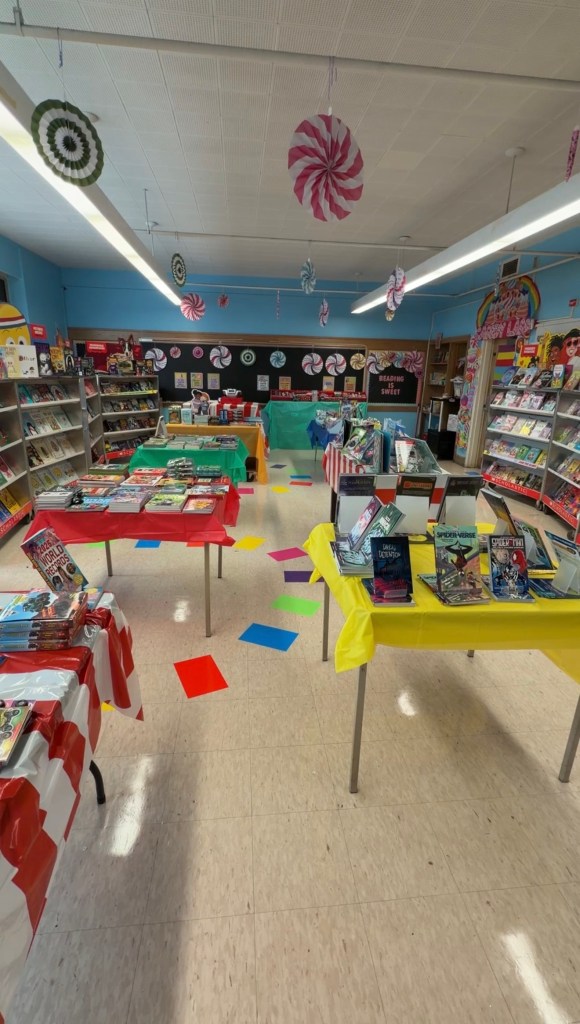
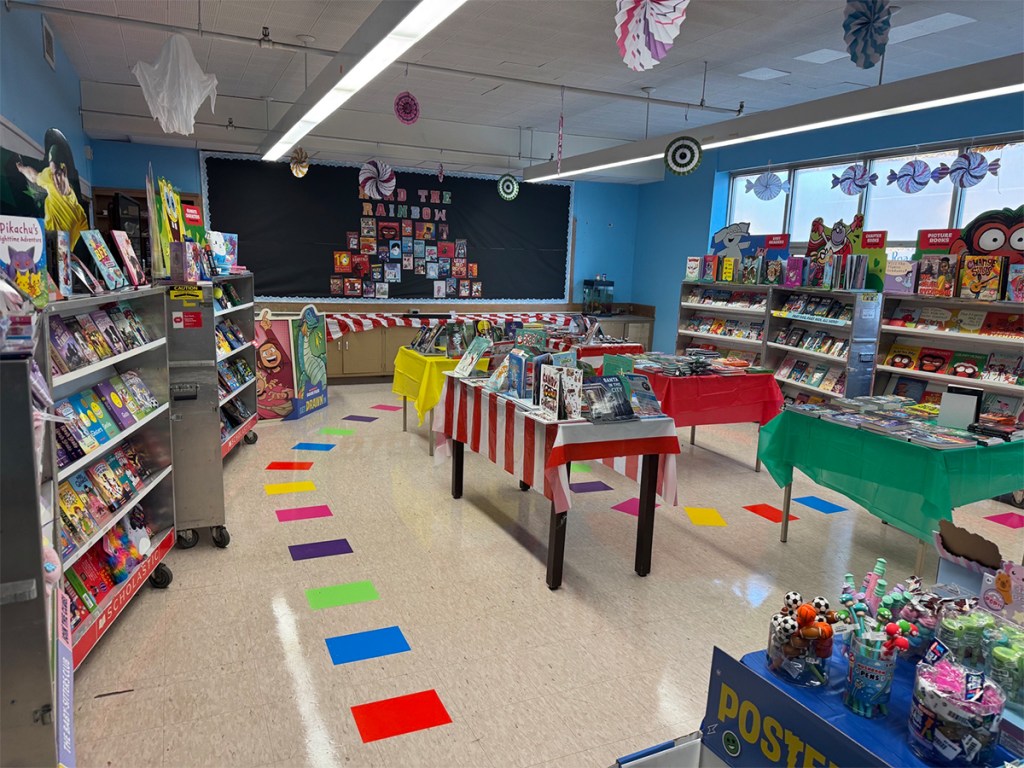
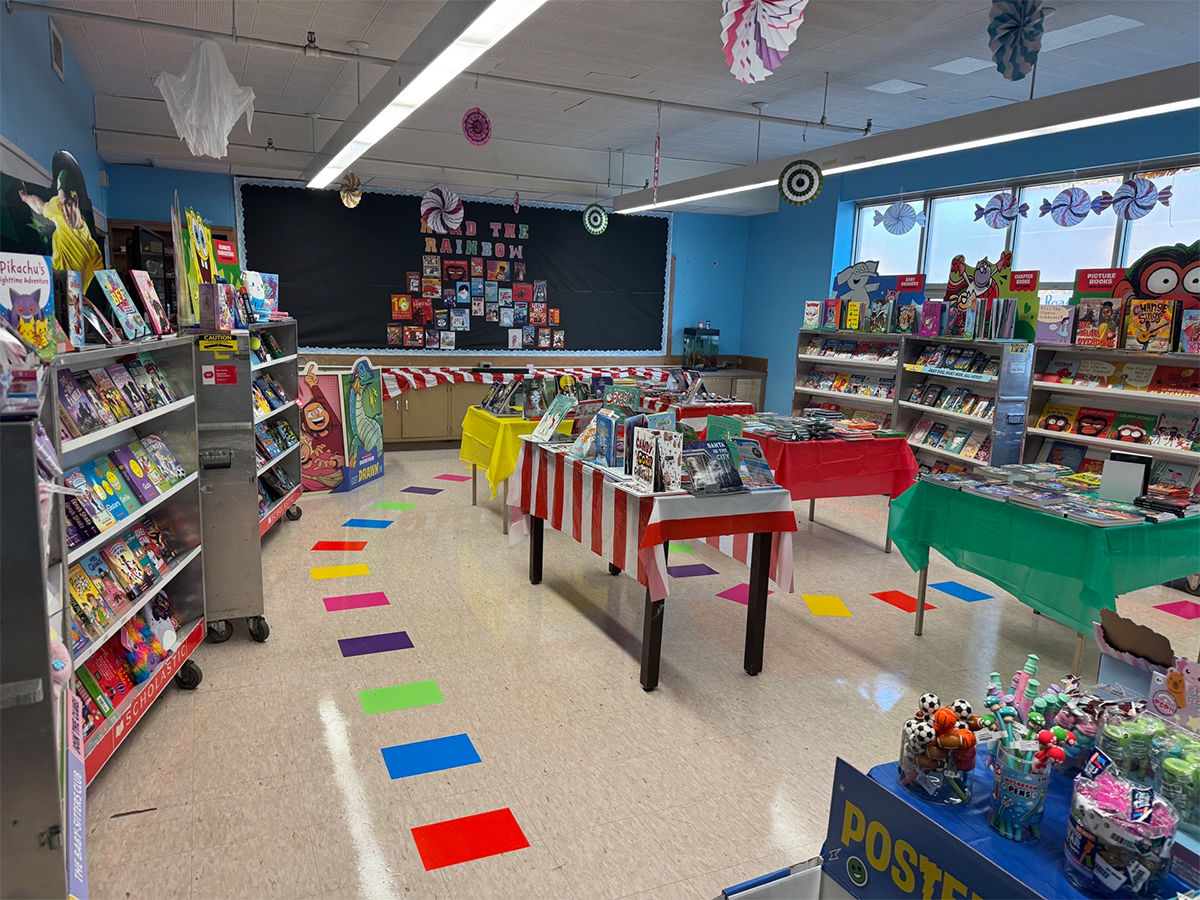
At the High Road School of Hartford, staff started holding school-wide book fairs as part of a broader initiative to improve literacy outcomes for students. This year’s theme, “Reading is Sweet,” transformed the library into a bright and colorful, life-size Candy Land game.
“We wanted to give them access to have positive interactions with books and ensure they had access to preferred reading materials at home,” said Paige Canty, the school’s speech-language pathologist. “We make it a week-long affair with lots of fun build-up. Students created ‘wish lists’ and then identified which items were their top picks. The school team raised funds so that every student was able to purchase a few items each.”
Building Work Skills Through a School Book Fair Workplace Experience
This year’s second annual Scholastic book fair doubled as a workplace experience. Five high school students completed applications, interviewed, and were hired to support the event at the primary and middle school campus.
Canty organized the event and collaborated with teammates Rachael Chatel and Haley Welcome to create a full hiring process. Each student reviewed job descriptions and applied for positions in customer service, cashiering, and clean-up. They also had to complete an interview before officially being hired.
“We’re always trying to be creative in identifying authentic work-related experiences for our transition students to gain employment skills in a safe and structured environment,” said Canty. “This was a great way for them to work on their customer service and communication skills, and also get a taste for ‘shift work’ to work on soft job skills like sustained attention, staying on your feet, and following directions.”
Chatel added that she wanted to involve the high school students because it provided a great way to target some of their transition goals while also being an opportunity for them to demonstrate another side of themselves – acting as older students and role models in terms of respect and behavior.
“The high school students really enjoy visiting the primary school, said Chatel, the school’s instructional support specialist. “It’s always surprising to see their maturity become more evident when working with the younger students. Many of the high schoolers have younger siblings, so it’s nice to see that softer side of them.”
How Literacy and Transition Goals Came Together
For many students, this was their first time working directly with younger peers or performing tasks like greeting customers, handling payments, or being entrusted to work with limited supervision. Staff noted that the experience allowed high schoolers to see themselves as leaders and role models. They helped younger students navigate choices and encouraged them to ask for help.
“High schoolers were paired with primary students and helped them figure out which books they could buy with a set budget. They made good suggestions and then helped guide them through the checkout process,” said Canty.
The impact extended beyond the day itself. By participating in the hiring process, interviewing, and completing assigned tasks, students made meaningful progress on transition goals written into their individualized education plans.
Why School Book Fair Literacy Programs Matter
The book fair showed how on-campus experiences can build real-world skills and confidence. It offered students a chance to practice workplace expectations in a supportive setting and to see themselves as capable future employees and leaders in their school community.
“Opportunities like this help foster a positive and rewarding atmosphere for students who have had a difficult time in previous educational placements,” said Canty. “They may have had previous negative experiences with school and learning to read, and providing opportunities like this helps to change their attitudes and learn to see reading as a fun and rewarding activity.”
Additionally, the event has strengthened the connection between the high school and primary school campuses. High schoolers share that they enjoy helping the younger students. As a result, the younger students have already asked when they will be returning.
“Our youngest students (grades K-4) were the most excited to see the high school students,” said Chatel. “They asked questions about the high school and even asked them to come back. In fact, some of my students on the clean-up crew finished early and created an obstacle course in the motor lab for the younger students. They used various items, including a foam balance bar, trampoline, crash pad, and balance rocks, to create a fun course for the students to practice following directions and safely expend their energy. The high schoolers modeled the obstacle course, and then the younger students were able to copy, with the high schoolers cheering for them as they each completed.”