

Staff Spotlight: Paige Canty at High Road School of Harford County
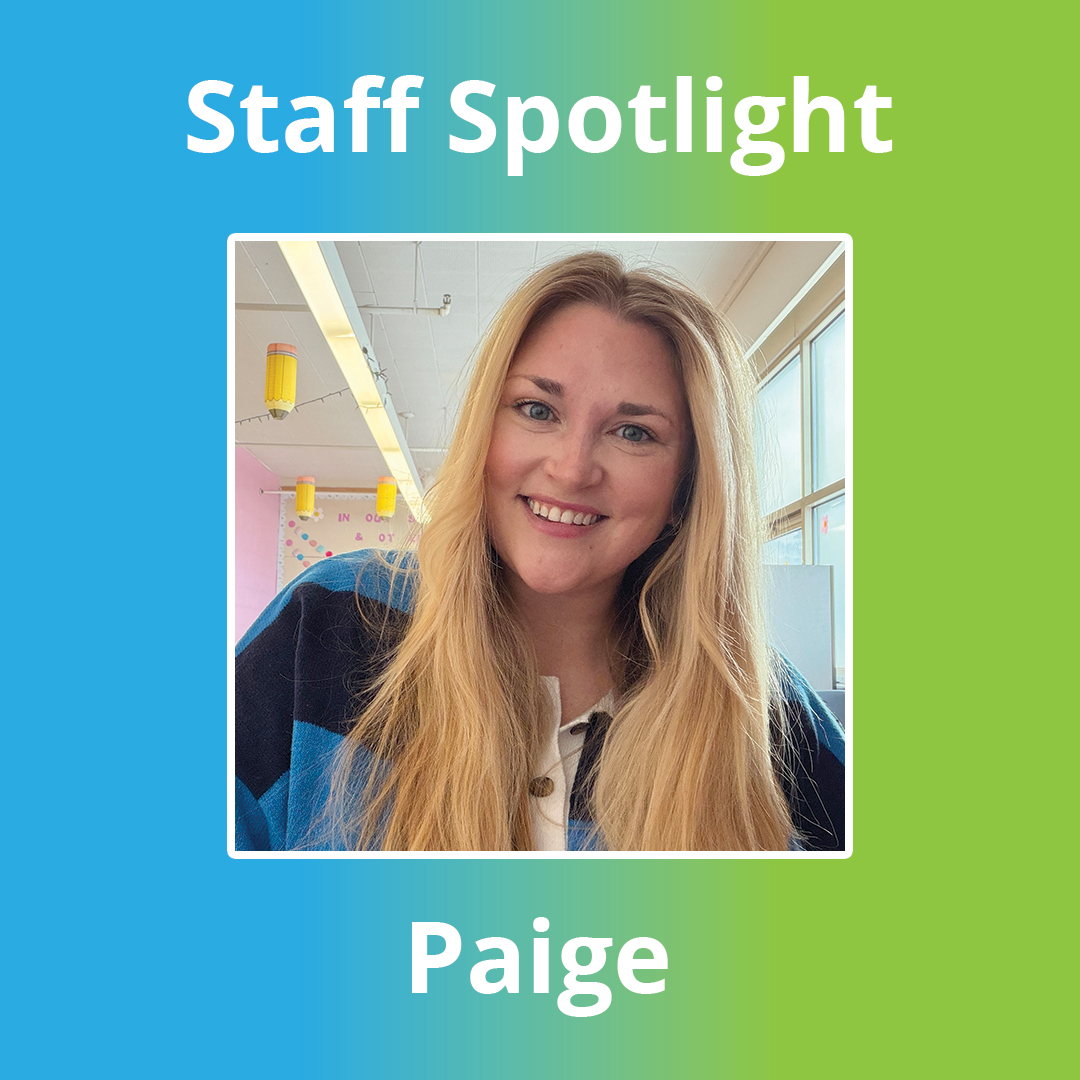
A Foundation in Communication and Learning
For Paige Canty, speech-language pathology is a foundation for learning. A speech-language pathologist at High Road Schools of Connecticut, Canty joined the organization in 2013 and more than a decade later, she says the support and respect she feels as a clinician are what have kept her here. She describes the organization as a place where collaboration is expected, clinical judgment is valued, and staff are trusted to do what is best for students.
Finding Her Path in Speech-Language Pathology
While in college, Canty initially planned to pursue a career in education and majored in developmental psychology. Growing up alongside younger twin brothers who received speech therapy gave her early exposure to the field, as did an internship with the Pennsylvania School for the Deaf. Those experiences helped crystallize her career goal: supporting communication in whatever form students need it, particularly for those who require more intensive support.
“In a therapeutic school, you’re impacting students on so many levels,” said Canty. “It’s not just one skill. It’s everything that builds on communication.”
Supporting Students Across Programs
Canty splits her time between High Road’s primary and secondary programs in Hartford, and no two days look the same. Her work includes individual and group therapy, classroom observation, evaluations, and close collaboration with teachers, occupational therapists, social workers, and other specialists.
“Every day looks different because you’re meeting students where they are. Their mood, their regulation, what they need that day … that flexibility is critical,” she said.
Strengthening Language, Literacy, and Confidence
Much of Canty’s work focuses on language and literacy, areas that are often misunderstood in speech-language pathology. Many people assume speech therapy is limited to articulation, but Canty says that is only one aspect. Language comprehension, expressive language, and literacy skills are central to students’ success and make up a significant part of her role. Nearly all the students she works with struggle with literacy, which makes reading instruction and access to books a priority.
“Paige is a phenomenal staff member and an integral part of the team,” said Jennifer Johnson, regional director, High Road Schools of Connecticut. “She is a great advocate and support for students beyond the speech and language realm. Paige is also the first to volunteer to host and plan fun events for our students.”
Through read-alouds, library electives, and book fairs, she looks for ways to help students build literacy skills while also seeing reading as a practical life skill and a source of enjoyment.
Measuring Progress Over Time
Canty strongly believes that communication challenges are closely tied to behavior and confidence. When students cannot understand expectations or express themselves, frustration often follows. Strengthening communication skills supports not only academics but also peer relationships, emotional regulation, and participation in school life.
Progress, she says, is rarely fast. “It looks slow at first and happens over years, not weeks or months. But those small steps matter.” For some students, progress may mean attending a read-aloud for 10 minutes or participating in a group discussion. For others, it can mean a nonverbal student eventually speaking in full sentences.
Preparing Students for Life Beyond High School
The most rewarding part of her job is helping students rebuild their relationship with school and experience joy in learning. Above all, Canty hopes every student leaves High Road with the ability to self-advocate, understanding their own needs, and being able to ask for support.
“I want students to leave here knowing how to advocate for themselves. These are lifelong skills. Being able to say, ‘I need help with this,’ or ‘Can you slow down?’ really matters.”


Learn more about High Road School of Harford County