
B.E.S.T. Academy Celebrates Friendship Day for Students With Autism

Friendship Day for Students With Autism at B.E.S.T. Academy
This year, B.E.S.T. Academy’s Valentine’s Day celebration, dubbed Friendship Day, brought non-verbal students with autism together for an afternoon of peer interaction in the school’s motor lab.
The event was structured to reduce sensory and social barriers. Students rotated through activities in small groups, creating an environment that felt supportive, structured, and sensory-considerate.
Sensory-Friendly Activities Encourage Communication
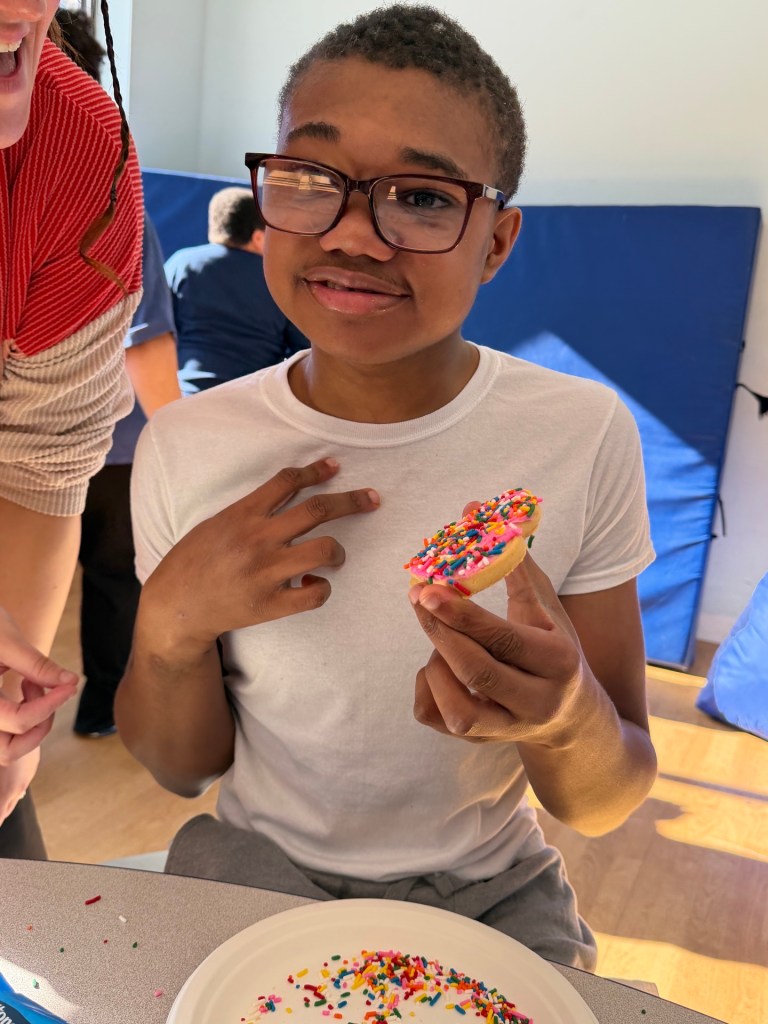
Students began their experience decorating heart-shaped cookies. Students selected frosting colors, requested sprinkles through AAC devices, gestures, or eye gaze, shared materials with peers, and practiced waiting and turn-taking. Staff described it as a functional communication activity as much as a festive one.
The pride on their faces as they created their own designs was priceless. Some students carefully layered every sprinkle with precision. Others joyfully covered their cookies in a colorful explosion.
Creative Expression During Friendship Day
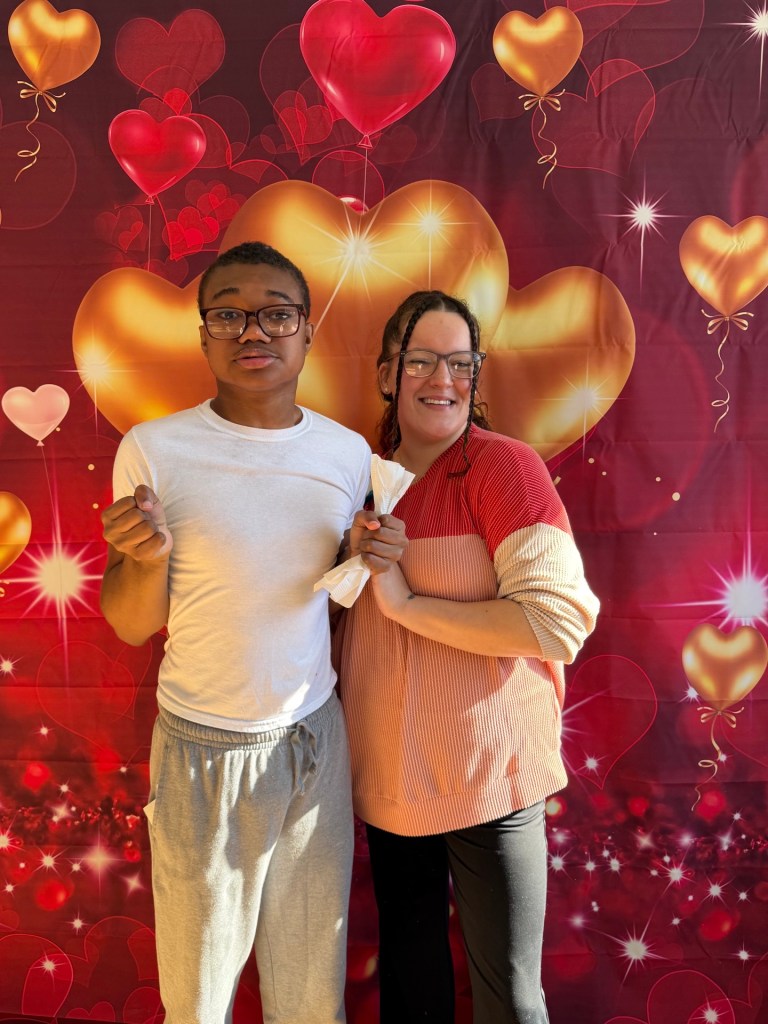
A Valentine’s-themed photo booth quickly became a favorite stop. With props, heart backdrops, and playful accessories, it offered a way for students to express themselves without relying on spoken language. Some posed independently while staff helped others with prompting and pose suggestions. The photos gave families a look at their child’s experience during the event.
Music and Movement Build Peer Interaction
Music ran through most of the event. Students danced, rocked, clapped, and moved at their own pace. Staff modeled social engagement by dancing alongside students, pairing peers together, and encouraging shared movement. Music is often used with non-verbal students for its rhythm and predictability. At the event, students moved closer to peers, reached for handholding, imitated dance movements, and stayed near peers longer than usual.
Why Friendship Day for Students With Autism Matters
Throughout the afternoon, students communicated through eye contact, shared laughter, gestures, AAC devices, and parallel play that gradually became direct interaction.
Events like Friendship Day are designed to give students low-pressure chances to practice social skills in a structured but enjoyable setting – building peer awareness, communication opportunities and self-advocacy along the way.