

Winter Olympics Therapy Activities at High Road School of Hartford
Winter Olympics Therapy Activities at High Road School of Hartford
As the world tuned in to the Milan Cortina 2026 Winter Olympics, students at High Road School of Hartford Primary found their own way to get in on the action – no plane rides or passports required.
Speech-Language Pathologist Paige Canty and Occupational Therapist Megan Mele recently co-led a series of therapy groups centered on a Winter Olympics theme, blending academic enrichment with targeted therapeutic goals across a handful of creative, hands-on stations.
“The speech therapist and I are always trying to create therapeutic activities centered around holidays, seasons, current events, and more as a means of increasing students’ general fund of knowledge,” said Mele. “We find that these activities not only seem to be the most engaging, but students demonstrate a nice retention and carryover of what they are taught. For the Extended School Year during the summer of 2024, we did a week-long theme for the Summer Olympics, which the students really enjoyed. We were excited for the winter Olympics to roll around so we could repeat, but with our cold-weather sports!”
Creative Winter Olympics Therapy Activities for Students
At the Olympic rings station, students used paint and toilet paper tubes to stamp and recreate the iconic five-ring design. The activity challenged them to apply positional language, above, below, next to, touching, while using visual perceptual skills to accurately identify which rings connect and which do not.
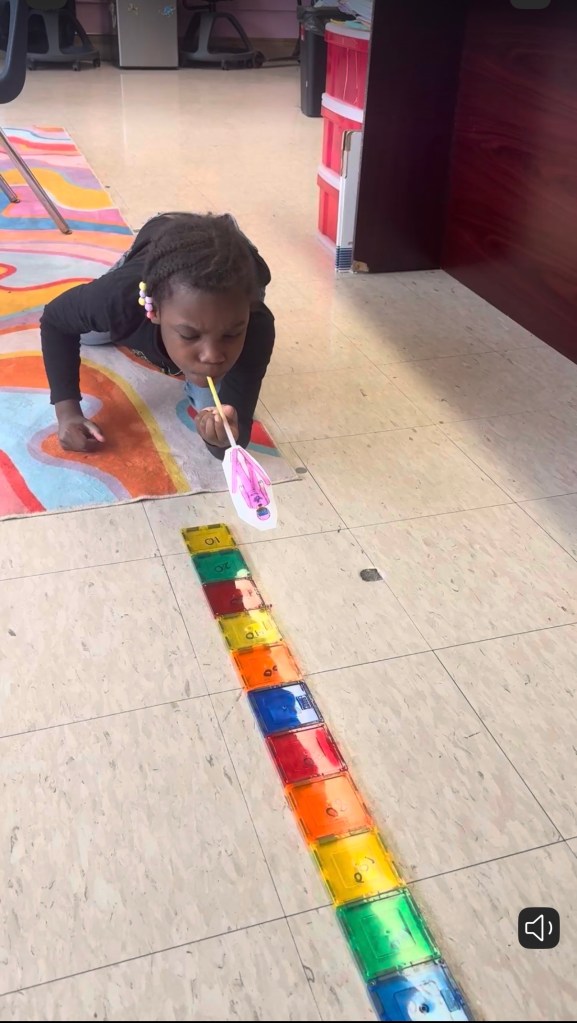
The ski jumping station put breath support to the test. Students colored, cut, and assembled paper ski jumpers attached to straws, then used controlled exhalation to propel their skiers down a slope, building oral motor strength and respiratory control in the process.
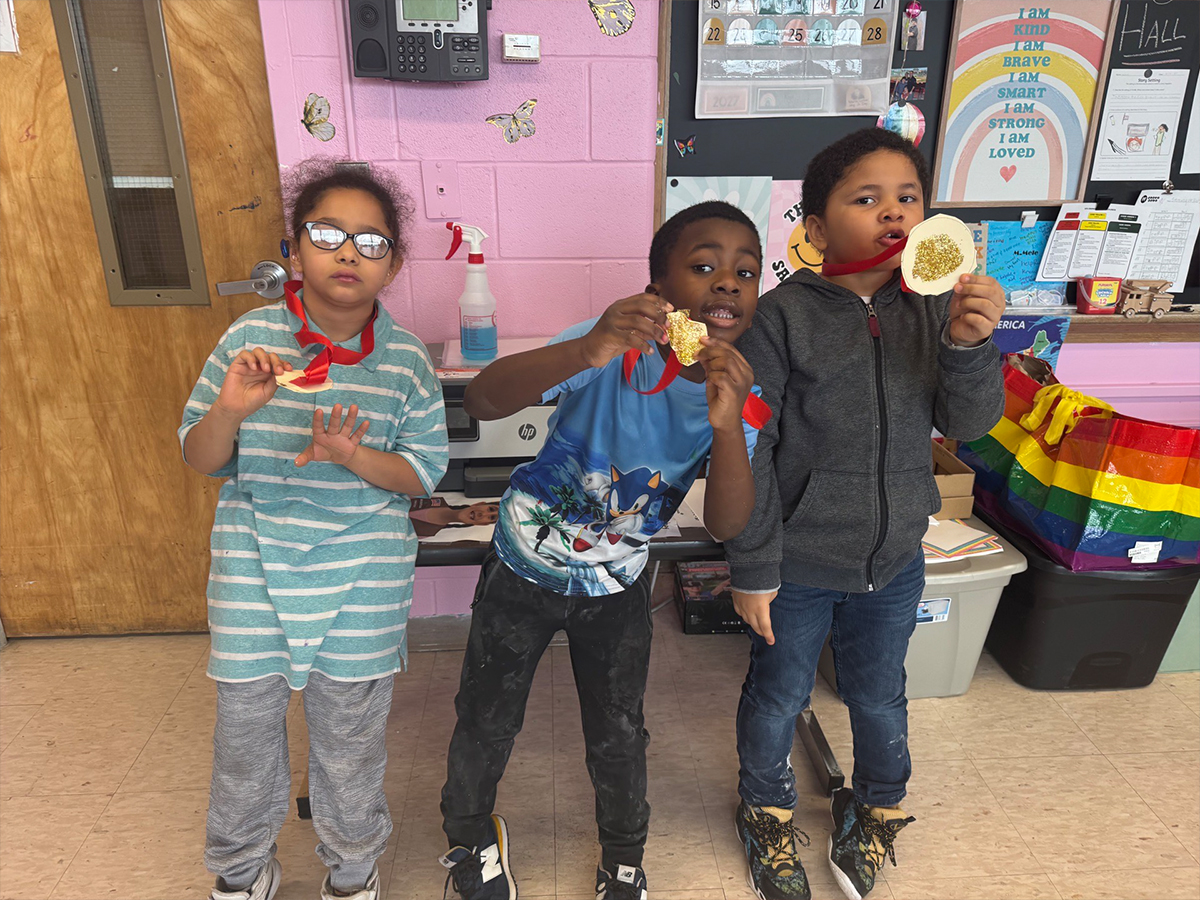
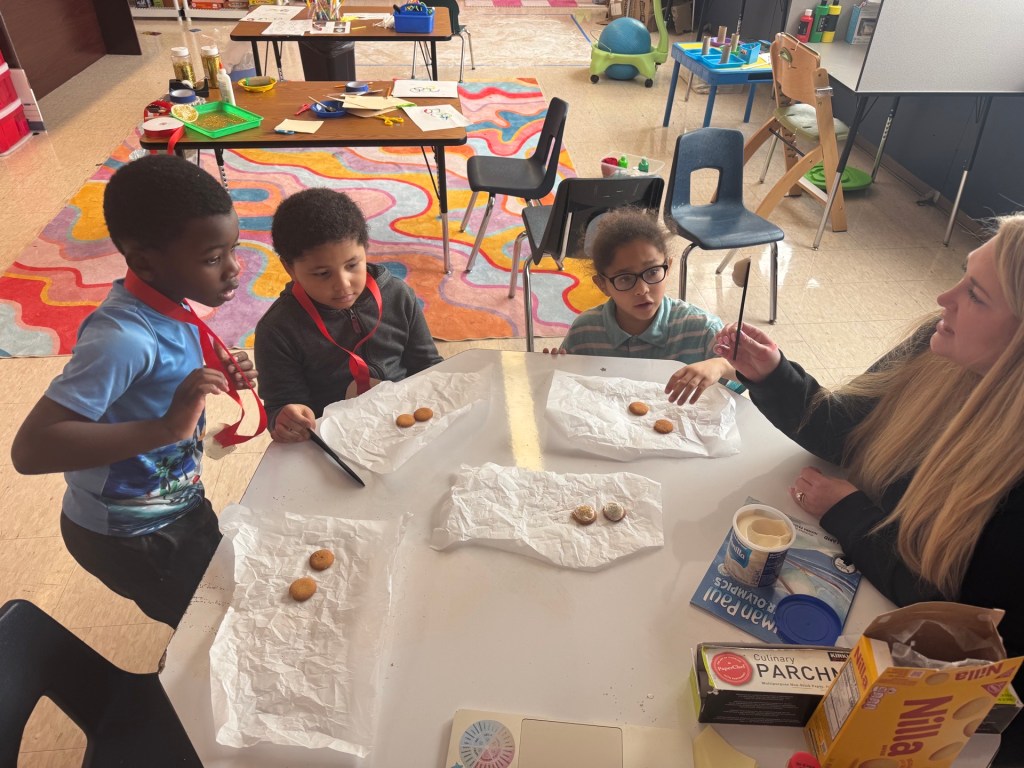
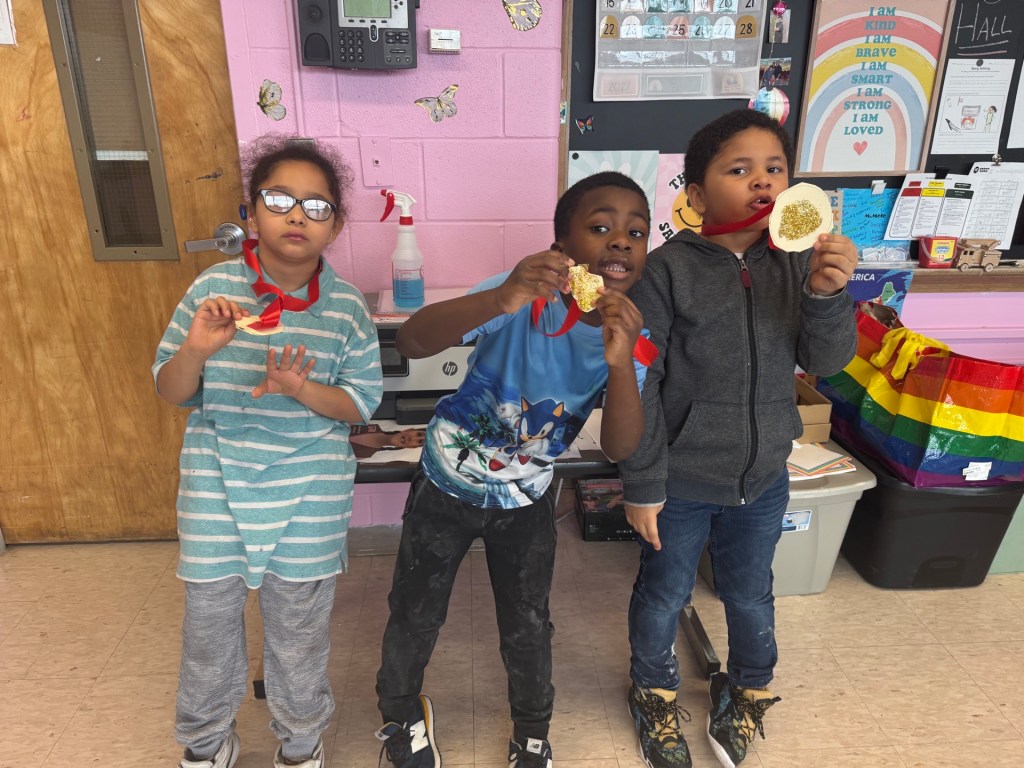
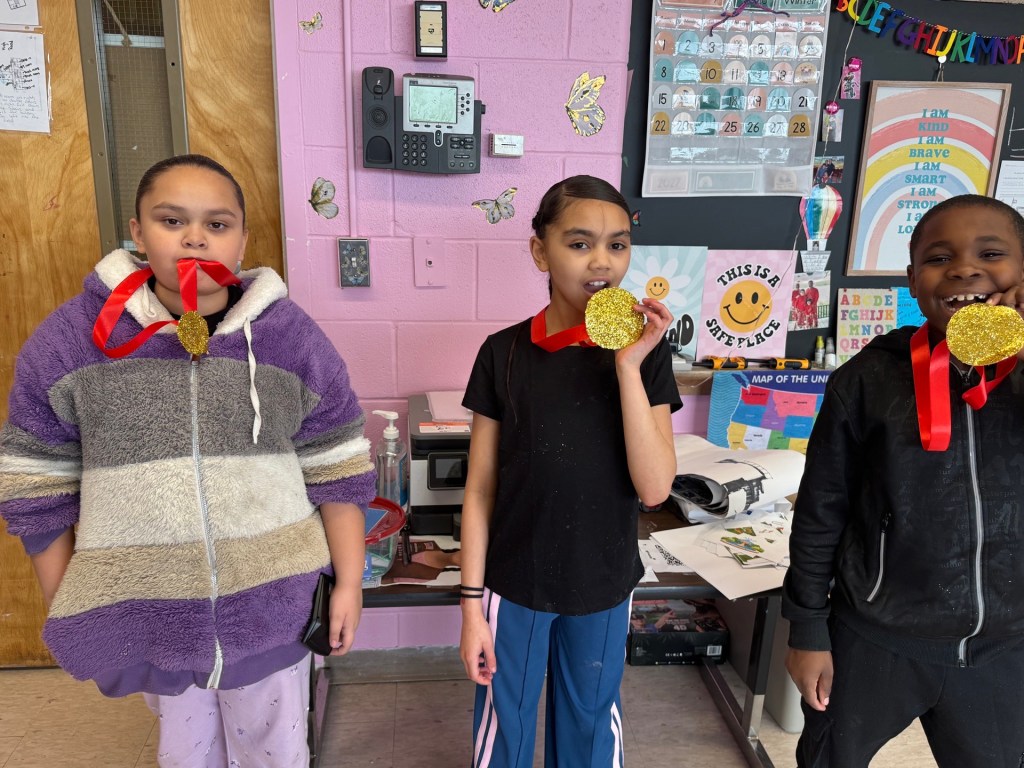
Medal ceremonies got a hands-on twist as students decorated cookie medals with icing and sprinkles, reinforcing language concepts around gold, silver, and bronze placements while practicing fine motor skills. They also crafted glittering gold medals by tracing circles, applying glue, and covering them in gold glitter, targeting visual-motor integration along the way.
Sensory Learning Through Winter Olympics Therapy Activities
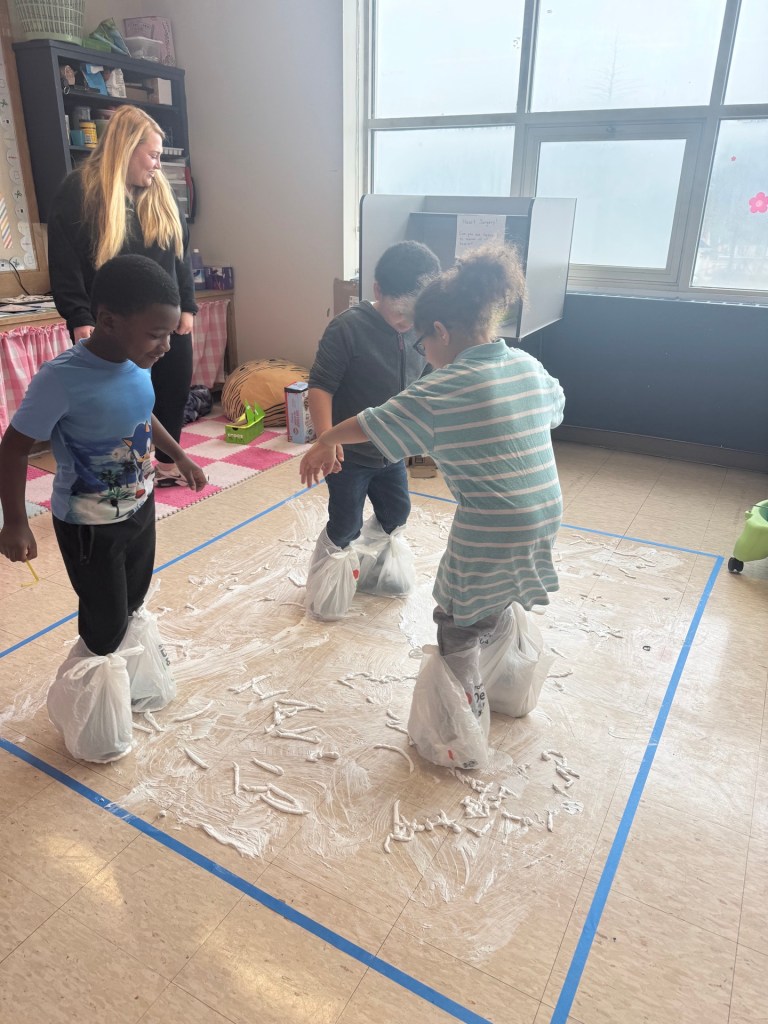
The final station may have been the most memorable. Students slipped plastic bags over their shoes and took to a “skating rink” made of shaving cream spread across the classroom floor, gliding and occasionally tumbling to the Olympic theme song. The activity worked on balance and motor planning while delivering a full sensory experience that more than a few students leaned into enthusiastically.
“The most fun was watching the students ice skate on the shaving cream rink,” said Mele. “Many of the students remarked they had never gone ice skating. I tried it myself; it was amazing how comparable this felt to the real thing. It was exciting to feel like we were replicating this real-life experience, but in a simple and accessible way. The kids were brave to try skills such as spinning and jumping, and it was so cool to see them going outside their comfort zones.”
How Winter Olympics Therapy Activities Support Multiple Skills
The collaborative format allowed Canty and Mele to address a wide range of therapeutic goals, speech and language development, fine motor skills, coordination, breath support, and sensory exploration, within a single, cohesive session. Framing the work around a real-world event like the Olympics gave students meaningful context while keeping energy and engagement high throughout.
The session is a strong example of what interdisciplinary therapy can look like in practice: purposeful, creative, and genuinely fun for everyone in the room.
Related Resources
-

High Road School of Hartford Primary Hosts Annual S.T.E.A.M. Fair
Annual S.T.E.A.M. Fair Celebrates Learning and Creativity The halls of High Road School of Hartford Primary were filled with creativity…June 1, 2026 -
One School, One Book Debuts at High Road School of Hartford Primary
One School, One Book Debuts at High Road School of Hartford Primary This year marked an exciting milestone for High…April 22, 2026 -
Island Adventure: A Summer of Exploration at High Road School
At High Road School, learning doesn’t stop when the school year ends. Once again this summer, students will continue building…March 27, 2026